Leadership

Growth & Development, Leadership

4 Things About Entrepreneurship We Can Learn From Steve Jobs

4 Things About Entrepreneurship We Can Learn From Steve Jobs Your work is going to fill a large part of your life, and the only way to be truly satisfied is to do what you believe is great work“. As an entrepreneur, Steve Jobs never ceases to come out with great innovations – because he loves what he does. In this article, we share 4 things all of us can learn about entrepreneurship from Steve Jobs. 1. Always persevere Going above and beyond what you are required to do, goes a long way. Be punctual to work. Get that additional research done. Help a colleague out with an urgent project. Every time you do something, think of one extra thing you can do especially if other people aren’t doing that extra thing. It seems hard but the end result will see you reaping success. 2. Time is your best resource – use it wisely Stay organised and plan accordingly to best utilise your time effectively. This way you have more time to get innovative and come up with your next big idea! 3. Embrace failure Failures in life and business in general, may be caused by things beyond our control. Most of the time, it’s us, and that’s okay. Every successful person has failed at something. A positive attitude in turning such failures as a stepping stone for success is crucial. Own it, learn from the experience and be sure to turn things around the next time! 4. Teamwork makes the dream work Teamwork enables the employees and the business as a whole to see the bigger picture. Surrounding yourself with people who share the same values and goals boosts morale, increases productivity and growth of the business. Above all, never give up on your dreams, take calculated risks and allow your ideas to flourish! Related Topics: Business Marketing & Advertising Accounting & Finance

Growth & Development, Leadership

Presentation, Persistence and Personality – The 3Ps for Career Success

Presentation, Persistence and Personality – The 3Ps for Career Success There is a difference between looking for a career and looking for a job. A job is often a temporary fix. Often jobs provide the income meet financial commitments or just to get the bills paid. A job is slinging burgers at the local diner, having a paper route or holding a sign in front of a pizza place. It is what we do when trying to work through college, get our first apartment or an awesome outfit from the boutique window. Careers are meant to be more permanent in the long run, whereas a job is often considered a cumbersome necessity. After acquiring the proper skills and schooling, those seeking long-term career success need to consider the 3Ps below. Presentation – Building self-confidence Young and old career seekers alike are challenged by the necessary task of selling themselves as a product and separating their career persona from their true self. Who you are is not necessarily who you are at work, and it is important to distinguish between the two. Most interviewers are not interested in details about your personal life, even if they ask – give a neutral response. For instance, professionals do not look for fallible, emotional, sensitive individuals to fill career slots within their company. Instead, they seek strong, controlled and somewhat cool individuals to take charge and move the company forward. Our career persona is the superhero version of ourselves. Step into the interview as if the position is already yours. Persistence – Why does it matter? It matters because it is no longer enough just to look professional and have a nice resume. In today’s competitive career industry, we have to stand out to potential employers. Career interviews are different than the local pizza joint hiring process. In many cases, you might end up being one among a dozen prospective candidates, waiting to step through the door. The majority of which will be dressed in proper business attire, with a well thought out resume in hand. Future employers already know that we want the job, otherwise we wouldn’t be there. However, we have to show we want the job more than the “other” applicant. Do not be afraid to reach out occasionally as a reminder of your existence. Send an email, make a phone call, or send a “thank you for the opportunity” note to draw the right attention to yourself over other career seekers. Personality – Developing your persona for career success Salesmen can be boring, so do not sell yourself as a salesman would. Avoid mundane phrases and overzealous small talk. If you see the interviewers’ lips move with yours… it is a bad sign. Be original. Always express the personality trait that fits your career of choice. When choosing a career, you have to step forward with a career mentality. Putting these 3Ps  into practice will help you exude enthusiasm and professional persistence, complimented with a well-trained skill set. Talk less, listen more. Achieve long-term career success by focusing on these 3 aspects! Related Topics: General

Leadership

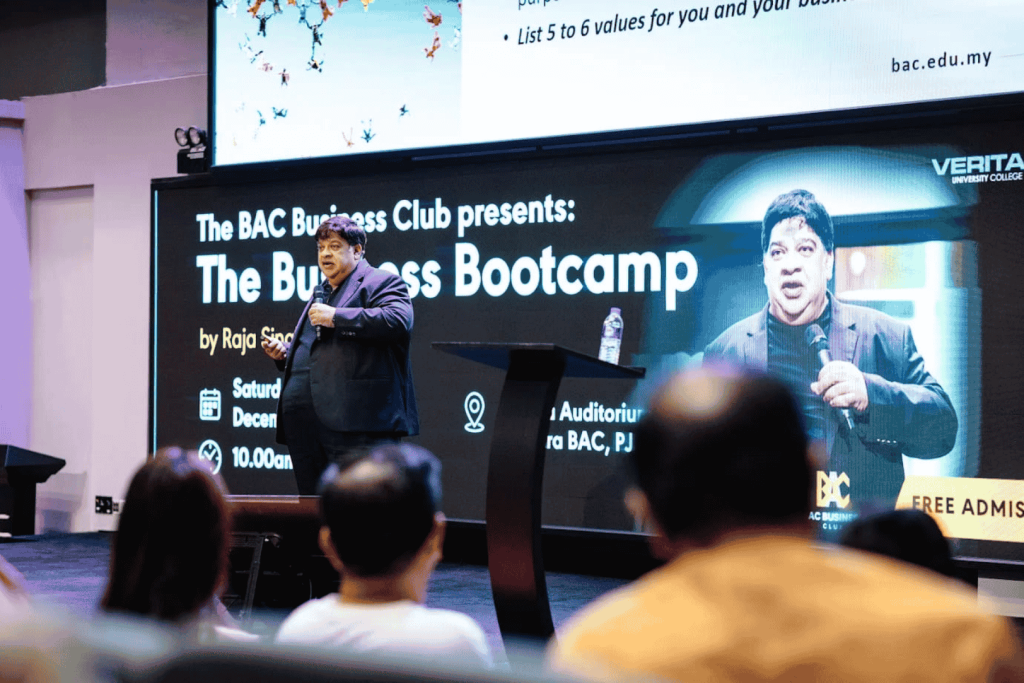
Lessons in Entrepreneurship A Business Bootcamp with Raja Singham

Lessons in Entrepreneurship A Business Bootcamp with Raja Singham By Joash Pandita Starting from Nothing On December 7th, an empowering Business Bootcamp took place, led by BAC’s Raja Singham. The event proved to be a life-changing experience for aspiring entrepreneurs, as Raja, the Managing Director and Chief Future Officer of BAC Education Group, delivered an eye-opening session. Through his honest sharing of personal challenges and victories, coupled with practical strategies, he left the audience with timeless lessons on entrepreneurship. He began by telling his own journey—one defined by resilience and determination. Raja spoke candidly about losing everything at one point in his life and the daunting process of rebuilding from the ground up. His story served as a powerful reminder that success rarely comes without setbacks. Yet, with persistence and the courage to start again, even the most difficult obstacles can be overcome. Moving with a Vision At the heart of Raja Singham’s message was the importance of having a clear vision. True success, he explained, often stems from the ability to spot opportunities that others overlook, combined with the courage to innovate and take risks. This mindset of experimentation is what distinguishes successful entrepreneurs from those who stumble when uncertainty arises. He highlighted five essential traits every entrepreneur must develop: Ideas, Drive, People Skills, Unique Workstyle, and Financial Savviness. Ideas form the foundation of any business, but it takes relentless drive to transform them into reality. Strong people skills are equally critical, enabling leaders to form meaningful relationships and inspire their teams. Paired with a personalized yet efficient workstyle and solid financial management, these qualities pave the way for lasting success. Purpose was another recurring theme. Raja urged participants to reflect deeply on the “why” behind their business. Purpose, anchored by strong values, becomes a compass for decision-making, whether in client acquisition, partnerships, or motivating employees toward a shared mission. Still, he reminded the audience that passion must be matched with practicality. An exciting idea means little if it lacks market demand. The real test lies in asking: “Is there truly a market for what you’re offering?” Adaptable and Modern Raja also emphasized the necessity of adaptability in a rapidly changing world. To remain relevant, businesses must evolve continuously, refining their products and services to align with shifting market needs—not only to keep up with competitors but also to anticipate future demands. Another key takeaway was the value of skill mastery. Entrepreneurs, he advised, should aim to become the best in their field to attract customers and build trust. When combined with strong leadership, this expertise creates credibility and confidence. “Lead with composure,” he encouraged. “Be authentic, accountable, and courageous enough to make difficult choices. Leadership is not about avoiding pressure but rising above it.” Sustainable and Communal In today’s technology-driven world, Raja highlighted the necessity of leveraging modern tools such as artificial intelligence to streamline processes and enhance customer experiences. He also encouraged entrepreneurs to build businesses aligned with environmental, social, and governance (ESG) principles, ensuring sustainability and long-term relevance. Collaboration, he explained, is another pillar of growth. Rather than clinging to outdated business models, leaders should seek partnerships with like-minded individuals and organisations that share a spirit of innovation. Above all, entrepreneurs should put people first—customers, employees, and stakeholders alike. By focusing on customer-centricity and reducing unnecessary red tape, businesses can build stronger trust and credibility. The BAC Business Bootcamp was more than an event—it was a roadmap for building purposeful, adaptable, and future-ready businesses. Raja Singham’s insights reminded participants that true success comes not from avoiding failure but from learning, adapting, and striving for excellence. With vision, skills, and innovation, paired with strong values, entrepreneurs can create enterprises that are profitable, meaningful, and impactful.

Leadership

Unlocking Your Future: UNIMY and BAC Pioneer the Fusion of Law and Tech for Next-Gen Leaders

Unlocking Your Future: UNIMY and BAC Pioneer the Fusion of Law and Tech for Next-Gen Leaders By Joash Pandita A New Chapter UNIMY is embarking on an exciting journey into the future of education with its dynamic Tech Talk: The Future of Legal Services, set to transform the way legal studies are taught. IMAGINE THIS: a powerful combination of legal expertise and state-of-the-art technology. Ready to be part of something groundbreaking? Let’s explore what’s ahead! Meet the Game-Changers! The Tech Talk delivered a truly remarkable experience, featuring trailblazing speakers at the forefront of law and technology. Special recognition goes to Mr. G. Vijay Kumar (Partner, TMT, LHAG), Dr. Jasmine Begum (Regional Director, Microsoft ASEAN), and Mr. Andrew S. Kalish (General Counsel, BAC Education), who brought incredible insights to the table. This is just the beginning—let’s discover how this new journey will shape the next era of modern education! Making It Official! The discussion was skillfully guided by Mr. Thillai Raj T. Ramanathan, CTO of BAC Education, ensuring the conversation was both insightful and engaging. Adding energy and charm to the event was Ms. Khairunisa Binti Mispa, who kept the momentum high throughout. The highlight of the day? The formal signing of the Memorandum of Understanding (MOU) between UNIMY and BAC. This milestone isn’t just a collaboration—it’s a promise to reshape education by merging legal knowledge with the latest in technology, creating an unparalleled learning experience. What does this mean for YOU? It means access to a curriculum that goes beyond theory. You’ll learn law while embracing cutting-edge technology, combining classroom lessons with real-world applications that prepare you for the digital era. Innovation That’s All About You At UNIMY and BAC, we don’t just adapt to change—we drive it. This partnership is built to inspire innovation and nurture creativity, shaping future leaders in legal tech. Here’s what’s in it for you: Be part of a forward-thinking education system. Gain the skills and tools needed to thrive in a rapidly evolving industry. Build strong connections that will serve you throughout your career. As the demand for tech-literate legal professionals grows, you’ll be positioned not only to succeed but to stand out as a leader in this transformative field. This is your chance to join a revolutionary movement. Legal education is being reimagined—bold, tech-savvy, and tailored to tomorrow’s world. Together, let’s lead the way into a future where law and technology intersect, unlocking opportunities without limits. Your journey begins here. Let’s transform education, together!

Leadership

Inspiring Entrepreneurs: Lessons In Leadership

Inspiring Entrepreneurs: Lessons In Leadership Becoming a successful entrepreneur can be compared to experimenting with recipes in cooking – it often begins by following tried-and-tested methods before eventually crafting your own. In the same way, the path to success in business involves learning from others while gradually shaping your own unique approach. Across the globe, countless entrepreneurs have built remarkable legacies, but one common trait stands out among them: strong leadership. Good leadership not only drives business growth but also empowers every member of the team. Let’s explore how some of the world’s most influential entrepreneurs developed their leadership styles. Bill Gates It’s nearly impossible to discuss entrepreneurship without mentioning Bill Gates, the co-founder of Microsoft and one of the wealthiest entrepreneurs in history. Gates believes that great leadership requires carefully analyzing situations from all perspectives before making decisions. His approach highlights the importance of weighing all options thoroughly to ensure clarity and sound judgment in business. Jeff Bezos Amazon’s founder, Jeff Bezos, stresses the importance of being a missionary rather than a mercenary. In his view, true success comes from prioritizing customers, products, and services rather than focusing solely on selling or profits. His leadership style teaches that building strong customer relationships and delivering value are essential for long-term growth. Mark Zuckerberg The founder of Facebook, Mark Zuckerberg, gained global recognition not only for his platform but also through a Hollywood film that portrayed its creation. One of his key leadership principles is passion. Zuckerberg believes in facing challenges directly while maintaining a love for the work you do. His philosophy emphasizes that combining creativity with problem-solving skills is crucial for aspiring entrepreneurs. Jack Ma Jack Ma’s rise to success with Alibaba was fueled by vision, resilience, and determination. Despite facing multiple rejections early in his career, he never gave up. His journey proves that persistence and hard work are vital leadership traits, and they often pave the way for breakthrough success. If you dream of joining their league, keep sharpening your leadership qualities. With perseverance and vision, you might one day be the next entrepreneur inspiring future generations. Related Topics: Accounting & Finance, Business, Marketing & Advertising

Leadership, Wellbeing

Handling Emergencies: How we Navigated the Pandemic

Handling Emergencies: How we Navigated the Pandemic By Nash Nithi Emergencies—whether caused by natural disasters, health outbreaks, or sudden unexpected events—can disrupt everyday life and bring about serious challenges. The COVID-19 pandemic highlighted the importance of being prepared and flexible when facing crises. Below are key strategies to manage emergencies effectively, helping ensure safety and resilience in difficult times. Stay Informed Access to accurate and timely information is vital in any crisis. Trusted Sources: Follow updates from reliable outlets such as government agencies, health departments, and respected news providers. During the pandemic, organisations like the World Health Organisation (WHO) and the Centers for Disease Control and Prevention (CDC) were critical in sharing accurate information. Local Alerts: Subscribe to local emergency alerts and notifications. These provide immediate updates relevant to your area, including evacuation orders, weather warnings, and public health notices. Social Media: While social platforms can deliver quick updates, always verify the accuracy before taking action to avoid falling victim to misinformation. Have a Preparedness Plan A well-structured plan ensures quick and effective response during emergencies. Emergency Kit: Prepare a kit with essentials such as water, non-perishable food, medication, first-aid supplies, flashlights, batteries, and key documents. Communication Plan: Agree on communication methods with family or friends, including emergency contacts, meeting spots, and backup methods in case phones or internet fail. Evacuation Plan: Learn your area’s evacuation routes and safe shelters. Make sure every household member is familiar with the procedure. Maintain Health and Hygiene Good health practices are especially important during outbreaks or health-related emergencies. PPE Supplies: Keep a supply of masks, gloves, and hand sanitiser. Use them properly to lower the chance of infection. Hygiene Habits: Wash hands frequently, avoid touching your face, and cover your mouth and nose when sneezing or coughing. Vaccinations: Stay updated with recommended vaccines. During health crises, this includes specific vaccines for the ongoing outbreak. Financial Preparedness Emergencies often affect finances, so preparing in advance can help reduce the impact. Emergency Fund: Save enough to cover three to six months of living costs for unexpected expenses. Insurance: Review health, home, and life insurance policies to ensure you have sufficient coverage. Budgeting: Manage your finances wisely during emergencies by focusing on essential needs and reducing unnecessary spending. Mental and Emotional Well-being The uncertainty of emergencies can be mentally exhausting. Safeguarding your emotional health is just as important as physical safety. Stay Connected: Keep in touch with family and friends via calls, video chats, or online platforms for emotional support. Manage Stress: Use stress-reducing practices like meditation, exercise, deep breathing, or taking breaks from constant news updates. Seek Support: Reach out to mental health professionals if needed. Many now offer online services for easier access. Adapt and Be Flexible The ability to adjust to changing conditions is crucial during crises. Remote Options: Shift to remote work or online learning where possible, and create a productive home environment. Modify Plans: Be open to adjusting travel, events, or routines as circumstances evolve. Stay updated on restrictions and safety guidelines. Community Engagement: Help strengthen community resilience by volunteering, assisting neighbours, or sharing resources. Review and Learn Once the crisis subsides, reflecting on the experience helps improve future readiness. Evaluate: Consider what worked and what fell short in your response plan. Identify gaps to address. Update Plans: Incorporate new strategies, tools, and improvements into your preparedness plan. Stay Ready: Continue to maintain readiness even after the crisis. Regularly refresh emergency kits, update contacts, and stay informed on potential risks. By staying informed, planning ahead, protecting health and finances, supporting mental well-being, and remaining adaptable, you can reduce the impact of emergencies. Preparedness and resilience are the foundation of overcoming challenges and emerging stronger from any crisis.

Leadership

Workplace Psychology: Making Workplaces Better Using Psychology

Workplace Psychology: Making Workplaces Better Using Psychology By Nash Nithi Workplace psychology, a branch of industrial-organisational psychology, examines how people behave at work with the aim of improving productivity, job satisfaction and overall well-being. By applying psychological principles, organisations can design healthier, more efficient environments that benefit both staff and employers. This overview highlights core areas of workplace psychology, such as employee motivation, stress management, teamwork, leadership and organisational culture, while outlining strategies to improve workplace dynamics. Understanding Employee Motivation Motivation plays a central role in shaping employee performance and satisfaction. By understanding what drives individuals, managers can create conditions that nurture engagement. Key Motivation Theories Maslow’s Hierarchy of Needs: Suggests that individuals have different levels of needs—ranging from basic survival to self-fulfilment. Addressing these needs, from safety to recognition, can inspire greater motivation. Herzberg’s Two-Factor Theory: Distinguishes between hygiene factors (like salary and work conditions) that prevent dissatisfaction, and motivators (like recognition and responsibility) that spark true engagement. Self-Determination Theory (SDT): Highlights autonomy, competence and relatedness as key drivers of motivation. Employees thrive when they feel in control, skilled in their work and connected to others. Practical Strategies Goal Setting: Clear, specific, and measurable goals (using the SMART framework) help employees stay focused and motivated. Incentives: Rewards, recognition and opportunities for development—both monetary and non-monetary—can significantly boost morale. Managing Stress in the Workplace Stress can undermine health, productivity and satisfaction. Proactive stress management is therefore vital for a healthy work culture. Identifying Stressors Heavy workloads, lack of autonomy, unclear expectations and poor work-life balance are common sources of stress. Surveys and open communication can help uncover these issues. Reducing Stress Workload Management: Ensure tasks are realistic and encourage breaks to avoid burnout. Support Systems: Provide access to counselling, EAPs and other resources. Healthy Environments: Comfortable workspaces with good lighting, ergonomic setups and wellness initiatives can ease stress. Strengthening Teamwork Strong teamwork is critical for organisational success. By fostering collaboration and addressing group dynamics, organisations can boost both performance and employee satisfaction. Building Effective Teams Diversity: A mix of skills, backgrounds and perspectives fosters creativity and problem-solving. Defined Roles: Clarity in responsibilities prevents misunderstandings and conflict. Open Communication: Honest dialogue builds trust and cohesion, supported by regular team discussions and feedback sessions. Resolving Conflict Conflicts are natural but need to be managed constructively. Mediation: Neutral facilitators can help teams find solutions. Training: Teaching conflict resolution skills empowers employees to address issues effectively. Leadership and Management Good leadership steers teams towards achieving goals and shapes workplace culture. Recognising different leadership styles helps leaders become more effective. Leadership Styles Transformational Leadership: Inspires and motivates through vision and innovation, often leading to higher engagement. Transactional Leadership: Focuses on rules, structure and rewards. Effective for task completion but less so for long-term inspiration. Servant Leadership: Puts team needs first, encouraging development and trust. Developing Leaders Training: Ongoing learning in communication, decision-making and emotional intelligence strengthens leadership skills. Mentorship: Pairing rising leaders with mentors provides guidance and growth opportunities. Shaping Organisational Culture Culture reflects the shared values, beliefs and behaviours within an organisation. A positive culture enhances retention, satisfaction and performance. Core Elements Values & Mission: Clear goals and values give employees purpose. Recognition: Celebrating contributions reinforces positive behaviours. Work-Life Balance: Policies like flexible hours or remote work support overall well-being. Building and Sustaining Culture Leadership Commitment: Leaders must demonstrate the culture they want to instil. Employee Involvement: Encouraging staff participation in decisions builds ownership and alignment. Workplace psychology provides valuable insights into creating better environments for employees. By addressing motivation, managing stress, enhancing teamwork, supporting leadership and cultivating a positive culture, organisations can unlock both individual potential and collective success. As workplaces continue to evolve, applying psychological principles will remain key to building organisations where employees thrive.

Leadership, TECH

Morgan Stanley Develops own AI System

Morgan Stanley Develops own AI System By Joash Pandita Morgan Stanley, a leading American multinational investment bank and financial services provider, has rolled out its second generative AI tool called AI @ Morgan Stanley Debrief. Designed to support financial advisors, the tool summarises video meetings and prepares follow-up emails, reinforcing the firm’s ongoing partnership with OpenAI. This new development follows the successful launch of the AI Knowledge Assistant in September 2023, which enables advisors to quickly access insights from Morgan Stanley’s vast research library. Alexandra Mousavizadeh, co-founder of Evident, highlighted that Morgan Stanley’s decision to build its own AI solutions, rather than rely on ready-made products, reflects a growing movement across the financial services sector. Tailored AI tools integrate more smoothly with existing processes, ultimately boosting efficiency and effectiveness. Mousavizadeh also noted that designing AI for specific requirements is especially valuable in industries like insurance and retail. “you get to design it, make it to fit into your workflows and just make it more seamless,” Alexandra Mousavizadeh, co-founder of Evident Other major banks, including BNP Paribas and TD Bank, are also collaborating with specialized AI developers such as Mistral AI and Cohere. Yet, Morgan Stanley distinguishes itself through its deep customization and integration, powered by OpenAI’s GPT model. David Wu, Morgan Stanley’s Head of AI Product & Architecture Strategy, explained that building proprietary AI tools ensures seamless interaction with the firm’s existing platforms like Microsoft Outlook, Zoom, and Salesforce. Unlike generic alternatives, these customized solutions are specifically designed to meet the unique needs of their advisors. Although still in its early rollout phase, this strategy signals a bold move towards in-house AI development to drive productivity and enhance client service. The firm’s partnership with OpenAI has already shown strong results, with its knowledge assistant tool being actively used by 98% of teams. This success highlights the long-term value of customized AI applications and underscores that artificial intelligence is set to remain a central force in the financial industry.

Leadership, TECH

AI and Ethics

AI and Ethics By Nash Nithi In today’s era of rapid technological progress, artificial intelligence (AI) has become a powerful force reshaping industries such as healthcare, finance, and transportation. While AI offers tremendous opportunities for innovation and efficiency, it also raises critical ethical questions that must be addressed to ensure its responsible use. This article highlights some of the pressing concerns—including algorithmic bias, data privacy, and responsible AI practices—and connects them to broader ethical frameworks championed by educational institutions like the University of Information Technology (UNIMY). Algorithmic Bias: An Ongoing Concern A key ethical issue in AI is algorithmic bias, which arises when flawed data or assumptions cause AI systems to produce unfair outcomes. For instance, facial recognition software has been criticised for being less accurate in identifying people from certain racial backgrounds, reinforcing inequality and discrimination in areas such as hiring, policing, and loan approvals. Institutions like UNIMY play an important role in tackling this challenge by embedding ethics into AI education. By training students to understand how bias originates and how it impacts real-world systems, universities prepare them to design fairer and more transparent AI models. Additionally, academic research contributes to creating tools and methods to detect and reduce bias in algorithms. Data Privacy: Protecting Personal Data AI relies heavily on large amounts of data, which brings significant concerns about consent, security, and misuse of personal information. With data breaches and cases of unauthorised use becoming more common, public trust in how AI handles personal data is increasingly fragile. To address this, newer methods are being developed to prioritise privacy in AI systems. Examples include federated learning, where models are trained on decentralised data without centralised storage, and differential privacy, which protects individual identities by adding randomness to datasets. Universities like UNIMY can lead in this area by conducting research and equipping students with skills in privacy-focused technologies, ensuring that future AI experts prioritise the safeguarding of personal information. Responsible AI Development: Principles and Implementation Responsible AI refers to developing and applying AI systems according to principles such as fairness, transparency, accountability, and safety. However, putting these values into practice is not always straightforward—it requires making AI understandable to users, ensuring developers are held accountable, and guaranteeing that AI benefits society. Academic institutions play a central role in advancing responsible AI. UNIMY, for example, can integrate case studies and hands-on projects into its curriculum, encouraging students to consider ethics in practical scenarios. Collaborations across disciplines—bringing together engineers, ethicists, and industry leaders—further enrich education and ensure students develop a holistic view of AI’s ethical implications. The Future of AI: Policy and Collaboration As AI continues to evolve, policymaking becomes increasingly crucial in shaping its ethical landscape. Governments and international organisations have already introduced regulations, such as the EU’s GDPR, which sets standards for data privacy, while other frameworks address wider ethical concerns. UNIMY and similar institutions can contribute meaningfully by sharing expertise, conducting research, and collaborating with policymakers and industry. These partnerships ensure regulations support both technological progress and ethical responsibility. The ethical challenges posed by AI are complex but vital for its sustainable integration into society. Educational institutions, especially universities like UNIMY, play a pivotal role in developing ethical AI practices through teaching, research, and engagement with policy debates. By instilling values of accountability, fairness, and privacy, universities help shape professionals who are not only skilled but also conscious of AI’s broader societal impact. Looking ahead, the dialogue between technology and ethics will only intensify as AI becomes more advanced. It is essential for academics, industry practitioners, policymakers, and the public to work together to address emerging concerns and ensure AI development aligns with human rights and dignity. In conclusion, building responsible AI is an ongoing process. Institutions like UNIMY are at the heart of this journey, guiding innovation while acting as ethical compasses. Through education, research, and policy influence, they help ensure AI technologies bring lasting, positive change to society. Explore the programmes offered by UNIMY today.

Scroll to Top