Author name: Hrd_admin

Wellbeing

Networking For Introverts

Networking For Introverts Keith Ferrazzi( author of Never Eat Alone a best-seller on networking for professional success) once said, “Networking isn’t smarmy”. Instead, the term ‘networking’ is a buzzword for building sincere relationships based on mutual generosity. Good networks help you find jobs, recruit talent, and helps you attract potential clients and investors.  However, for those of us on the quieter end of the scale, i.e. introverts, talking and reaching out to people can be… a bit of a trial. The process of making small talk and breaking the ice to establish the roots of the network can feel insincere or manipulative. To add to that, introverts often tend avoid a lot of social interactions due to a fear of rejection. It is much easier to avoid it, and avoid the pain that come along with it. But in doing so, introverts also wind up indirectly undermining their careers, their projects, and themselves.    But don’t despair- there’s a way to get past your networking demons. Keep reading to see how you can make the best of each opportunity! Tip #1: Be Prepared Approach all networking opportunities with a game plan. Before you dive into an event, whether it’s a group event or dinner party, make sure you do your homework. Find out who will be attending, and think critically about your objectives for attending in the first place. What information do you want to walk away with and what do you want to convey to the people you meet?    As far as possible, try to avoid charging in without a plan, or “winging it” unless there is literally no other option available. Tip #2: Time Your Entry No, this is not an invitation to get a confetti cannon for a grand entrance.   Walking up to join a group which is already engaged in a lively discussion can be an unbelievably intimidating experience- especially if you’re not the type who likes to put forth your own opinions. But this doesn’t mean that you can’t make your way in; you most certainly can! Just keep in mind that there is an art to doing so. To start with, avoid pushing your way into the group and blurting out opinions- nothing kills the conversation flow faster than someone barging in. To add to that, pushing your way in obnoxiously is guaranteed to leave a bad first impression on those watching. The best way to ease your way into the conversation is to just smile and listen for a moment to get the gist of the conversation.   Still wondering how to break the ice? When there is a pause, or another suitable opportunity, ask a simple question on the topic of discussion. This achieves two things; 1. It helps build your credibility- by asking a question, you show that you have some knowledge on the topic in question (as you know what to ask) and that you’re someone who takes the time to listen. 2. For someone shy, asking questions can be easier than launching into speech or stating an opinion- it invites others to speak with you, making it easier to connect.  Tip #3: Keep Business Cards Handy Never leave your workplace without a few of your business cards handy. Business cards are an effective way for you to leave your name behind so that people remember you-especially if you are introverted. If networking gets overwhelming, don’t squander any potential contacts you do have. Instead, offer them your business card and let them know it’s okay to reach out. They’ll be more likely to mirror your response by offering their own card -and that way, you’ll have made a solid, repeatable connection.   Tip #4: Listen More Everyone loves to talk- especially about themselves. And while some folks may be quiet, that doesn’t necessarily mean that they’re listening- some of them could just be waiting for the chance to continue talking. If you are on the shy side, listening is easier than talking. All you need to do is pay attention to the conversation and listen as sincerely as you can.  So how does this help with networking? By letting other people discuss their experiences and opinions with you – and listening with sincere interest – you will stick out as someone they had a great conversation with. And the best part? You won’t have to say much at all! Tip #5: Leverage On Human Curiosity Worried about freezing up mid-conversation? Here’s a way to avoid that- Think of a list of go-to questions that can get you through the first few minutes of meeting new faces. There’s no one on earth who doesn’t enjoy talking about themselves. Ask them about themselves and what they work on, or what they like to do in their free time. Learning about what makes people tick is what we do in business after all- and this is a handy way to meet new people while discovering common interests!  Above all, don’t forget to just be yourself and enjoy the experience!   Related Topics: General Law Business Marketing & Advertising Accounting & Finance Mass Comm Graphic Designing Broadcasting & Film IT Gaming Computer Engineering Software Engineering Hospitality & Tourism Education Psychology

Wellbeing

Health and Wellness Trends

Health and Wellness Trends By Nash Nithi In recent years, the collective consciousness surrounding health and wellness has shifted significantly. Gone are the days when health was viewed through the narrow lens of physical fitness and dietary restrictions. Today, the approach is far more holistic, encompassing not just the body, but also the mind and spirit. This broadened perspective has given rise to several emerging trends, including plant-based diets, mindfulness practices and holistic approaches to fitness, each playing a pivotal role in shaping the future of health and wellness. Plant-Based Diets: Nourishing the Body and the Planet The plant-based diet trend is more than just a fleeting fad; it’s a profound shift in how we think about food and its impact on our health and the environment. This diet emphasises whole, minimally processed foods that come from plants, including vegetables, fruits, nuts, seeds, oils, whole grains, legumes and beans. It’s not necessarily about refraining from all animal products but about prioritising plant-based foods. The benefits of a plant-based diet are manifold. For individuals, it offers a myriad of health advantages, including a lower risk of heart disease, hypertension, type 2 diabetes and certain cancers. From an environmental perspective, shifting towards plant-based eating can significantly reduce carbon footprint, water usage and land needed for farming, contributing to sustainability and conservation efforts. Mindfulness Practices: Cultivating Mental and Emotional Wellness Mindfulness has transformed from a niche practice to a mainstream trend, thanks in part to a growing body of research highlighting its benefits. Mindfulness involves being fully present and engaged in the moment, aware of our thoughts and feelings without distraction or judgment. This can be practiced through meditation, yoga, breathing exercises, or simply integrating mindful awareness into daily activities. The impact of mindfulness on health and wellness is profound. It has been shown to reduce stress, anxiety, and depression, improve attention and concentration, enhance emotional resilience, and even lower blood pressure. As the world becomes increasingly fast-paced and digitally connected, mindfulness offers a much-needed pause, helping individuals reconnect with themselves and their surroundings in a meaningful way. Holistic Approaches to Fitness: Beyond the Physical Body Holistic fitness takes into account the physical, mental and spiritual aspects of well-being. It’s an integrated approach that moves beyond mere exercise routines to include nutritional guidance, mental health support and practices that foster spiritual growth, such as meditation and mindfulness. The goal is not just to improve physical fitness but to achieve a balanced and harmonious state of being. This trend recognises that optimal health cannot be achieved through physical activity alone. Emotional and mental well-being are equally important and activities such as yoga and Tai Chi, which emphasise the connection between mind, body and spirit, have gained popularity. Holistic fitness programmes often incorporate nature walks, dance and team sports, promoting not only physical health but also social interaction and a deep connection with the natural world. Sustainability and Ethical Practices The connection between personal health and planetary health is becoming impossible to ignore. As awareness on the environmental impact of our lifestyle choices grows, future trends in health and wellness will increasingly emphasise sustainability and ethical practices. This will manifest in a greater demand for locally sourced, organic plant-based foods; eco-friendly fitness apparel and equipment; and wellness retreats and centres that prioritise sustainability in their operations. This shift not only benefits the environment but also aligns with a holistic approach to wellness that recognises the interdependence of all living things. Education and Accessibility A key challenge in the health and wellness industry has been the accessibility of information and resources. The future will see a concerted effort to democratise health and wellness, making it accessible to diverse populations regardless of socioeconomic status, geography, or education level. This could involve the integration of health and wellness education into school curriculums, community-based health initiatives and the use of technology to bridge gaps in access to information and services. By ensuring that everyone has the tools and knowledge to make informed decisions about their health, the wellness industry can play a crucial role in reducing health disparities and promoting equity. Integrative and Preventative Healthcare Finally, the integration of holistic health and wellness practices into the healthcare system represents a significant future trend. There is a growing recognition of the limitations of a purely reactive, treatment-focused healthcare model. The future will likely see a more preventative approach, one that integrates nutrition, fitness and mindfulness practices as foundational elements of healthcare. This shift requires not only changes in healthcare policy and insurance coverage but also a cultural shift in how we perceive health and wellness—as a spectrum that encompasses mental, emotional, physical and spiritual well-being. The future of health and wellness is bright, characterised by a more personalised, community-focused, sustainable, accessible and integrative approach. As we move forward, the trends of today will evolve into the foundations of tomorrow, shaping a world where health and wellness are woven into the fabric of society, accessible to all and recognised as essential for a fulfilling life.

TECH

5 Social Media Faux Pas To Avoid As A Job Seeker

5 Social Media Faux Pas To Avoid As A Job Seeker So, you have just graduated or even contemplating a career change. You may have prepared your resume but what about your social media accounts? In this article, we highlight 5 blunders to avoid on social media as a job seeker. 1. Inappropriate profile photos If you think that a profile photo of your night out partying best represents you – think again. Employers look for new talent who take their work seriously to represent their brand and company goals. Posting images of yourself which are inappropriate or offensive may kill your chances of being hired as many employers nowadays tend to vet their candidates’ presence on social media. In a competitive job market, you want to stand out for the right reasons! 2. Offensive remarks and ranting online You had a bad day in the office or at home, and all you want to do is rant. Hear this – DO NOT rant online. Similar to inappropriate profile photos, you must be wary of your conduct online. Tidy up your social media accounts by removing all status or posts shared that does not work in your favour as a professional. Always exercise caution when commenting or posting online to avoid things being taken out of context. 3. Avoid sharing confidential information Consider whether sharing details online about your past achievements or successful projects working for a particular company is permissible. Avoid sharing on social media detailed information about company business strategies, product innovations, etc, which may be regarded as sensitive corporate information. 4. No LinkedIn Profile Maintaining a LinkedIn profile is a great way to show future employers that you are serious about being employed by displaying your range of skills and work experience. In addition, you get to make valuable connections that may increase your chances of being hired. Including the link to your LinkedIn profile in your resume also indicates that you are career-minded. 5. Inactive social media accounts Allowing common social media accounts like LinkedIn, Facebook, etc to remain inactive for a prolonged period of time comes across as a lack of interest to employers. It is advisable to update your LinkedIn profile  and other common social media accounts such as Facebook and Instagram before seeking a new job. For many job seekers, social media presence is all about getting noticed by prospective employers and expanding your social network. Be mindful of your etiquette, be it online or offline to land that dream job! Related Topics: Marketing & Advertising IT Education

TECH

Tips to Start a Career in Digital Marketing

Tips to Start a Career in Digital Marketing The rise of smartphones has resulted in society having the world (or a close approximation of it anyway) at its fingertips. Once where newspapers and radio served as windows to the outside world, technological developments now mean that smartphones go beyond mere tools of communication. It also covers selling and marketing products through digital marketing. Digital Marketing can best be described as an umbrella term which covers all the strategies used by companies in identifying, building and targeting an audience with the aim of converting them into customers. It is a fast-paced and rewarding industry with high career prospects. If you are planning to get into digital marketing, now is the time to do so! To get your foot in the door, you may not need a traditional degree in marketing. Here are 5 ways you can get a head start into a career in digital marketing. 1. Be Eager and Willing to Learn You won’t learn about the digital marketing field or how to develop your skills in the area unless you are willing to learn from those who have experience in the area. Digital marketing is a rapidly developing field as well as an extremely competitive one. Having the passion, drive and willingness to learn new information or skills in the field will definitely contribute to a successful career. 2. Stay Up-To-Date on the Latest Developments Imagine recommending a particular marketing strategy in a major meeting, only to discover that the particular strategy is out-of-date compared to one that’s more effective. The point is, you need to keep up with the latest trends in the industry if you pursue digital marketing as a career. Attend online classes or attend seminars to stay relevant! 3. Learn the Terminology As a digital marketer, you will need to be comfortable with industry jargon – this includes numerous acronyms such as SEO (search engine optimisation), SEM (search engine marketing), CPA (Cost Per Action), and many more. The basic understanding of key terminology is essential. 4. Gain Knowledge on Data Analytics Analytics helps you understand how well a campaign is doing and how to improve in future. Try an online course on data analytics and gain a better understanding of how analytics works and how to use it. 5. Attend Networking Events If you are looking to land a job in digital marketing, you will definitely need to put yourself out there. The best way to do this is by networking. Meeting people within the same industry provides good references for your future career, in fact you might even find your mentor and gain valuable insights from their experience. Related Topics: Business Marketing & Advertising Accounting & Finance

TECH

Is AI a Threat or an Opportunity?

Is AI a Threat or an Opportunity? By Joash Pandita APNews recently released a piece about the Bulletin of Atomic Scientist’s ‘Doomsday Clock’ that now strikes just 90 seconds to midnight (Doomsday). Undoubtedly, the world is dealing with its fair share of crises, and one of them is Generative AI, but is that true? Let’s look into it. Modern AI has become such a prevalent feature in our lives that businesses, educational institutions, and the average person have practically adopted it into our “tools-to-function.” A simple example is Apple’s Siri. With more than a billion iPhone users, Apple’s Siri is one of the most used and utilised forms of AI that exists today. Not only that, but banking, search browsers, and even the simple task of sending an email have some sort of AI being used to smooth the user experience while also keeping your data safe. So, why do people perceive it as a tool that will aid in our very own destruction? It’s new, and AI is just another step in human evolution through technology. Just like the first tools—irrigation, the telephone, the steam engine, and the whole of the industrial revolution—AI is another step into a greater human existence and one that should be embraced wholeheartedly. Undoubtedly, social media and entertainment media have had an effect on the public’s outlook on AI since the 1980s, even though AI has been around since the 1950s. Movies like Terminator and 2001: A Space Odyssey have painted a bleak future of what AI could look like. Though the truth of the matter is much brighter than what those two movies make it out to be. As AI is still in its juvenile stage, where industries are starting to embrace it more and more, and engineers are understanding its capabilities, AI has been prone to the odd malfunction, and it is to be expected as AI programmes are progressively learning. Is there a need for AI in professional industries? This is one of the two most frequently asked questions when it comes to the use of AI. Is there really a need for it? Do we really need AI in industries like media, law, and engineering? These are very important questions, and one that I will tackle next! Is There a Need for AI Tech Lawyers? AI in law? What place does AI have in the legal industry? You’d be surprised. The reluctance of the legal sector to embrace technological advancements has been notable, but artificial intelligence is gradually starting to impact law practices. Implementing AI within law firms can greatly enhance efficiency and reduce costs, streamlining tasks like legal research and analysis, managing documents, and handling billing processes. It’s clear that technology has transformed the legal field, as legal tech tools have simplified the way lawyers operate, enhancing their efficiency and effectiveness. AI is certainly part of this technological evolution. The most basic and widespread application of AI in the legal field is electronic discovery (e-discovery), which involves searching through electronic data to find non-privileged information pertinent to a case or claim. E-discovery tools enable attorneys to sift through documents by applying search terms or particular criteria like dates or geographic areas. Consequently, lawyers receive responses much quicker than they would by reviewing physical documents. This accelerated process gives attorneys additional time to uncover more pertinent information. The process of allowing AI to sift through thousands of cases, statutes, and case decisions, as well as automate legal procedures for pre-court hearings, is exceptionally useful. While saving hundreds of man hours, a tool like AI will give lawyers a lot more time to conduct a more comprehensive analysis of assigned cases and, overall, just improve access to justice with lower costs. Is There a Need for AI Engineers? Probably one of the most important industries that will be affected in a more positive way than most is engineering. While all other industries will implement AI as a helper and a tool to supplement workload, the engineering industry will have a whole new expansion to their market. New jobs, new technological development needs, and higher-paying jobs while still remaining a small sector within the engineering field. Engineers are one of the few skilled workers that will actually progress the development and capabilities of AI. Engineers and programmers will be spearheading its evolution, and every other industry that exists outside of it will look to AI engineers for solutions, upgrades, and/or implementation of AI in their organisation. The best part for engineers is that their AI creations will also aid them directly. As the chief innovators in this new technology, engineers are crucial to ensuring that AI is used ethically and is a net benefit for society as a whole. How about you? Why should you know about AI and its uses? It is evident that AI is just our version of that; ever since the creation of the personal computer, we’ve been in our own Industrial Revolution, and the constantly growing implementation of AI is just the next phase of it. It extends across various aspects of life, from personal to professional realms. So, the conversation about not getting left behind in your understanding of technology is incredibly prevalent now. Becoming more AI-savvy also exposes you to the sheer arsenal of free tools that AI engineers and programmers have given to the public. Undoubtedly, these AI tools have significantly simplified numerous aspects of daily life for many people. Whether it’s employing AI for crafting professional resumes, aiding in software development, generating marketing materials, or efficiently locating information, the accessibility and convenience offered by AI are remarkable. The widespread influence of AI has made proficiency in understanding and utilising it a key component of achieving success in various fields.

TECH

What is Generative AI?

What is Generative AI? By Joash Pandita A New Revolution While some view it as a potential hazard, generative AI has emerged as a groundbreaking technology that empowers machines to produce content reminiscent of human creativity, significantly impacting a wide range of industries. This surge in the popularity of generative AI can be attributed to its user-friendly nature. The intuitive interfaces of most generative AI systems facilitate the creation of high-quality videos, images, and texts, attracting users for both personal and professional applications. Despite its contemporary acclaim, the roots of this technology trace back to the 1960s with the development of chatbots, showcasing its longstanding presence. The transformative leap in generating convincingly high-quality images, audios, and videos, however, came with the advent of generative adversarial networks (GANs). This machine learning framework marked a pivotal advancement, setting new standards for content generation. How Does It Work? Users can input a prompt, whether simple or detailed, choosing from formats such as images, videos, designs, musical compositions, and more commonly, text. The generative AI system then produces a unique end-product that aligns with the parameters suggested by the user. Notably, programs like ChatGPT and DALL-E excel at these tasks, creating outputs that fit the user’s specified criteria. Initial iterations of creative artificial intelligence demanded data input through an API or a similarly intricate procedure. Programmers were necessitated to master unique instruments and craft software utilizing programming languages like Python. Currently, innovators in the realm of generative AI are enhancing the interface, enabling users to articulate their needs in straightforward speech. Following a preliminary reply, there’s also the option to refine the outcomes by providing critiques on the desired aesthetics, mood, and various characteristics you wish the produced material to embody. What Are Its Benefits? Generative AI holds the potential for broad application across various business sectors, simplifying the interpretation and comprehension of current content while also autonomously generating new material. Developers are investigating how this technology can enhance current operational processes, with the intention of fully revising workflows to leverage the benefits of generative AI. The advantages of integrating generative AI into business operations are manifold, such as: Simplifying the process of creating content in a particular style. Summarizing complex information into a coherent narrative. Improving the response to specific technical queries. Creating realistic representations of people. Reducing the effort of responding to emails. Automating the manual process of writing content. What Are Its Limitations? Initial deployments of generative AI clearly showcase its numerous shortcomings. The challenges posed by generative AI often stem from the methodologies applied in executing specific applications. For instance, while a summarized version of a complicated subject might be more accessible to read, it simplifies the narrative, often omitting diverse sources that bolster critical arguments. This ease of reading, though, sacrifices the ability for users to scrutinize the origins of the presented information. Here are some of the limitations to consider when implementing or using a generative AI app: Results can gloss over bias, prejudice and hatred. It can be difficult to understand how to tune for new circumstances. It can be challenging to assess the bias of original sources. Realistic-sounding content makes it harder to identify inaccurate information. It does not always identify the source of content. Although the idea behind the technology isn’t novel, its contemporary implementation has advanced more rapidly in the past five years than in the preceding six decades. Generative AI has demonstrated its permanence in the tech landscape, with an increasing number of sectors embracing its latest iterations. It is swiftly becoming an essential technology, poised for widespread adoption across the social, economic, and political layers of societies worldwide. Why is it Important to You? In a world where the pace of technological advancement waits for no one, staying ahead isn’t just an option—it’s a necessity. Embrace the future with confidence by upskilling in AI and emerging technologies. Dive into online courses, participate in workshops, join tech communities, and explore hands-on projects to sharpen your skills. Discover the power of continuous learning and open the door to endless possibilities. Your journey towards innovation starts today. Are you ready to take the first step and transform your potential into reality?

TECH

How AI and Machine Learning are Revolutionising Industries

How AI and Machine Learning are Revolutionising Industries By Nash Nithi Artificial Intelligence (AI) and Machine Learning (ML) have moved from the realm of science fiction into the core of everyday business operations. These technologies are not only enhancing efficiencies but also opening up new opportunities for innovation across various sectors. Here’s a closer look at how AI and ML are revolutionizing industries. Healthcare AI and ML are transforming healthcare by enabling more accurate diagnoses, personalised treatments, and efficient administrative processes. Algorithms can analyse medical images faster and more accurately than human doctors, leading to earlier detection of conditions like cancer. Personalised medicine, powered by ML, tailors treatments to individual genetic profiles, enhancing effectiveness and reducing side effects. Additionally, AI-driven administrative tools streamline scheduling, billing, and patient record management, freeing up healthcare professionals to focus more on patient care. Finance In the financial sector, AI and ML are being used to enhance fraud detection, automate trading, and provide personalised financial advice. Machine learning algorithms can analyse vast amounts of transaction data to identify unusual patterns that may indicate fraudulent activity. Automated trading systems use AI to make split-second decisions, optimising investment strategies and improving market liquidity. Moreover, AI-driven chatbots and virtual assistants offer personalised customer service, providing financial advice and managing routine inquiries efficiently. Retail Retailers are leveraging AI and ML to improve customer experiences, optimise supply chains, and enhance inventory management. Personalised recommendation systems analyse customer behavior to suggest products tailored to individual preferences, increasing sales and customer satisfaction. AI-powered demand forecasting helps retailers manage inventory more effectively, reducing waste and ensuring that popular items are always in stock. Furthermore, AI-driven chatbots provide round-the-clock customer service, resolving issues and answering questions promptly. Manufacturing The manufacturing industry is witnessing a revolution through AI and ML by automating processes, improving quality control, and predicting maintenance needs. Robotics powered by AI are taking over repetitive tasks, increasing efficiency and reducing the risk of human error. Machine learning algorithms analyse production data to detect defects early, ensuring high-quality products. Predictive maintenance systems use AI to monitor equipment performance and predict failures before they occur, minimising downtime and maintenance costs. Transportation AI and ML are driving significant advancements in the transportation industry, from autonomous vehicles to optimised logistics. Self-driving cars, powered by AI, promise to reduce accidents and improve traffic flow. Machine learning algorithms optimise routes for delivery trucks, reducing fuel consumption and improving delivery times. AI-driven predictive maintenance systems monitor the health of vehicles, ensuring they operate efficiently and safely. Agriculture Agriculture is being revolutionised by AI and ML through precision farming, which uses data analysis to improve crop yields and reduce resource use. Drones equipped with AI analyse fields to monitor crop health, detect pests, and optimize irrigation. Machine learning algorithms predict weather patterns and crop performance, helping farmers make informed decisions. AI-powered robots automate harvesting and other labor-intensive tasks, increasing efficiency and reducing labor costs. Energy In the energy sector, AI and ML are optimising production, distribution, and consumption. Machine learning algorithms analyse data from sensors in power grids to predict demand and optimize supply, reducing energy waste. AI-driven predictive maintenance ensures that energy infrastructure operates efficiently and reliably. Additionally, AI is being used to develop more efficient renewable energy sources and improve energy storage solutions. AI and ML are not just buzzwords; they are powerful tools that are transforming industries by enhancing efficiencies, enabling innovation, and opening up new possibilities. As these technologies continue to evolve, their impact on various sectors will only grow, driving progress and creating a smarter, more connected world. Businesses that embrace AI and ML today are positioning themselves for success in the future, staying ahead of the curve and setting new standards in their respective industries.

TECH

AI-Directed, Driverless Drift: Stanford Engineering and Toyota Research Institute Achieve Autonomous Milestone

AI-Directed, Driverless Drift: Stanford Engineering and Toyota Research Institute Achieve Autonomous Milestone By Joash Pandita An Unprecedented Feat Stanford Engineering and the Toyota Research Institute have done something no one else has done, they have successfully executed the world’s first fully autonomous tandem drift. This is a significant achievement because it drastically pushes the boundaries of AI in autonomous vehicles, showcasing their ability to handle extreme driving conditions. What is Tandem Drifting? Tandem drifting is when 2 cars are drifting on the course simultaneously, in close proximity to one another. It is a task that challenges even the most skilled human drivers, requires split-second decision-making and precise control—skills now demonstrated by AI. The project’s primary aim is to enhance the safety and performance of self-driving cars. By mastering such complex maneuvers, researchers hope to advance AI capabilities, making autonomous vehicles safer and more reliable on the roads. A New Level of Safety Achieving a tandem drift autonomously required developing AI systems capable of processing vast amounts of data and reacting instantaneously to maintain control. This feat creates a new benchmark to showcase AI’s potential to handle not just everyday driving but also high-stress, dynamic scenarios. How Does This Affect Us? The mastery of tandem drifting by AI systems indicates significant progress in the field of autonomous driving. While autonomous driving cars do exist, they are not at levels of safety that begets confidence. However, this recent feat suggests that future self-driving cars can be equipped to handle emergency maneuvers and maintain stability under challenging conditions, thereby reducing accidents and improving overall road safety. AI is developing quickly in every industry and is not something to be frightened of. It is our new industrial revolution and with achievements such as this, our world with the help of AI, will move towards a safer world for not just drivers, but the average person in any situation.

TECH

Tech Talk: Unlocking the Secrets of Game Development

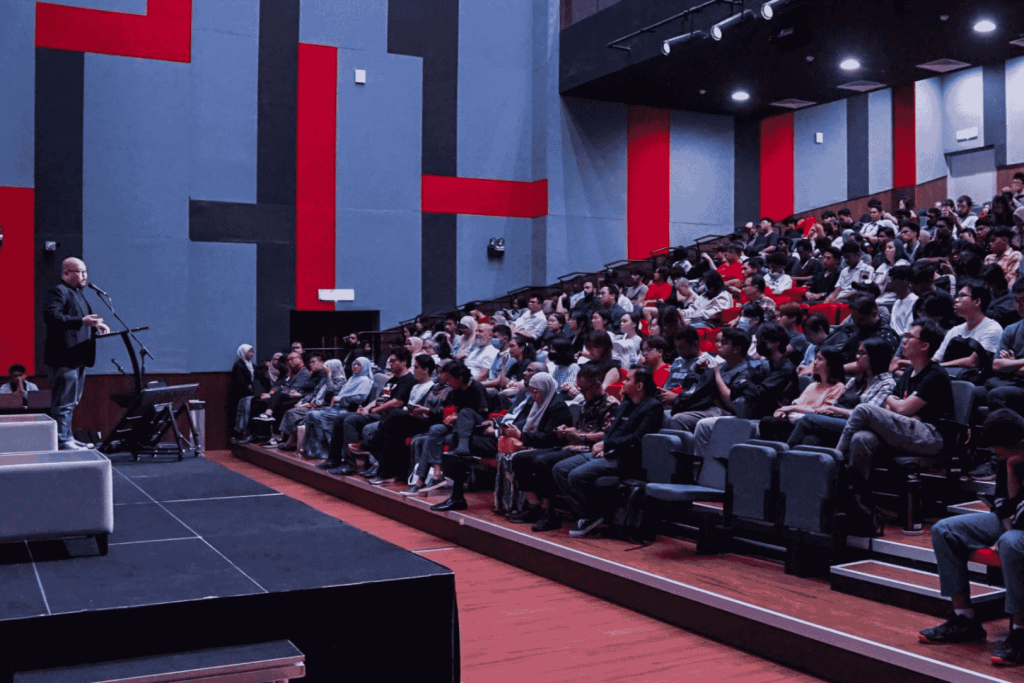
Tech Talk: Unlocking the Secrets of Game Development By Joash Pandita A Gathering of Industry Giants On March 6th, BAC’s Omnia Auditorium saw the gathering of industry professionals and tech enthusiasts for an incredible Tech Talk: Unlocking the Secrets of Game Development. A collaborative effort between UNIMY and IACT, the event brought a fusion of insights, innovations and commitments that promised to shape the digital entertainment space in Malaysia. With BAC Education’s Chief Future Officer, Mr. Raja Singham setting the stage for an exhilarating event with his charismatic opening remarks, the audience was hooked at what was to come. As BAC’s Chief Technology Officer Mr. Thillai Raj T Ramanathan stepped onto stage as Moderator, the event turned out to become this wonderful melting pot of ideas of industry stalwarts sharing their ideas. Mr. Muhammad Faris Abd Rahim of Todak Studios Sdn Bhd, Mr. Abdul Rafiq Abdullah from Qudwah Technology Sdn Bhd, Mr. Yee I-Van from MDEC and Mr. Ridzwan Azhar from Cool Code Sdn Bhd were among the notable individuals who graced the stage. Their perceptions, experiences, and ideas created a clear picture of how the game development industry is changing. Even UNIMY’s own, Dr. Juhanita Jiman brought her academic expertise to add great depth to all the discussions while also showcasing the plethora of possibilities and opportunities that students will be exposed to as they venture into this field. Her contributions are not to be understated, as she brought a vast amount of knowledge made the audience aware about the future of game development in Malaysia. Excitement for the Future The key moment undoubtedly, was the signing of a Memorandum of Understanding (MOU) between UNIMY and IACT, represented by Prof. Ts. Dr. Salwani Mohd Daud and Mr. Timothy Chan respectively. Going beyond just mere formality; it symbolised a commitment to empower the next generation of game developers, open doors to new opportunities and solidify Malaysia’s progress in becoming a key player in the industry. A special thanks must be expressed to Ms. Najwa for her vibrant emceeing, keeping the energy high throughout the event and to the dedicated volunteers whose efforts made the event a success. The showcases at the event were equally impressive, from the innovative offerings of 3dots, Panasonic, and ASUSTek Computer Malaysia Sdn Bhd to the captivating performance by Soerengan Dance from SMA Muhammadiyah, Indonesia. Overall, this event ended with hope, encouragement and excitement for the future of the game development industry in Malaysia, especially with this industry booming like it has in the past 10 years. Everyone is excited to see how the game development industry will be fostered into a new era in Malaysia with UNIMY being one of its leaders.

TECH

A.I. in the Modern Business Landscape

A.I. in the Modern Business Landscape Empowering Any Business By Joash Pandita The A.I. Filled World A.I. is everywhere—in our phones, in our schools, on the streets, in vehicles, and even in businesses. Whether we like it or not, it has swiftly assimilated into our everyday lives. Its use, however, can be a contentious matter, but it’s not something to fear at all. It is a useful tool that is already being utilised in every aspect of our lives. It shouldn’t be seen as a replacement for human intelligence and should be treated as a supportive tool to aid our ever-evolving landscape. Data, Data, Data Everything in business is data. When a salary is being paid, a cost of materials, the sales of products—all of it is data that can be quantified and collected. What is one thing current A.I. systems are great at? Compiling and structuring data way faster than any human could Not only is it good at compiling and structuring this data, but it is also able to identify possible consequences and help the human user streamline his or her decision-making process. Businesses have already been utilising A.I. for quite some time. While not as sophisticated as some other A.I. models that are being developed, they are certainly being used to streamline sales systems, focus algorithmic functions, form comprehensive insights in significantly less time, boost operational efficiency via automation, and many more. Here is a list of 5 Companies that significantly use A.I. in their day-to-day operations: 1. Tesla2. Amazon3. Google4. Microsoft5. Facebook All these companies use the help of A.I. to gather data to ensure that users have tailor-made content, features, and recommendations just for them. Each individual will have a different home screen for store recommendations, music suggestions, etc. due to the use of A.I. to understand the patterns of a user’s activity. This overall helps these and many other companies streamline their development processes for future updates and business decisions. While being used by a plethora of businesses, A.I. and its uses are still considered to be in their premature stages. It is in a constant state of fine-tuning and development and probably will stay in this stage for quite a number of years. However, its use in innovation by businesses has been growing significantly. Several corporations across the world have started or have already implemented A.I. into their products to elevate the user experience or are even using A.I. to help develop new products and services to be sold to the general public. A great example of this implementation is the iPhone’s Siri. An example of it being used to create new products to be sold is the current trend to create designs for apparel of all sorts. Used mainly by musical artists and internet influencers, these people are implementing A.I. into their creative business models. So, one begs the question: Is this avoidable? Well, the short answer is “no”. Just like the Industrial Revolution was a complete evolution of how businesses are run, A.I. is just going to be another part of how businesses and beyond will function for years to come. Whether it is going to be on the scale of what the Industrial Revolution was, that is something to see in time.

Scroll to Top